
Yesterday marked a dramatic change for the island of Maui and the people that call it home. After over 115 years (the current mill) of continuous operation, Alexander & Baldwin’s HC&S, also known as the Puunene Sugar Mill, harvested its final crop of sugar cane. And when that final truckload of sugar cane arrived at the mill, it marked not only the end of sugar on Maui, but the end of sugar in Hawaii as a whole.

Why is this a big deal? The sugar industry is in many ways the type of agriculture we try to avoid nowadays, right? A big mono-crop that’s very water intensive, requires lots of processing, and pollutes the air during field burns and processing. But the story of sugar in Hawaii is the story of our State. Sugar is the reason why Hawaii is the uniquely diverse place it is today. Many of us of Japanese, Chinese, Filipino, Portuguese, and Korean descent can trace our ancestry back to the sugar plantations. The plantations, after all, brought in all of these people from abroad to work the field and factories as cheap labor. But with it, a new type of culture emerged that blended all of the different influences together. That’s how we got true Hawaiian Pidgin, Hawaii’s own english dialect, and how we got unique dishes like saimin.
Over the past five decades, though, the sugar industry has been in decline in Hawaii. With sugar being produced cheaply in places like Brazil, Hawaii’s sugar plantations simply couldn’t compete and remain viable. Some of the mills, however, have thankfully remained. You’ll notice this in places like Waialua and Waipahu on Oahu, or even Lahaina, Maui, where the Pioneer Mill’s stack still stands. But HC&S was able to hold out a bit longer thanks to its scale and modernization efforts. But in the end, even that wasn’t enough to save it. HC&S was barely getting by as it was, but add in lawsuits over their use of water and air pollution from cane fires, and the writing was on the wall.
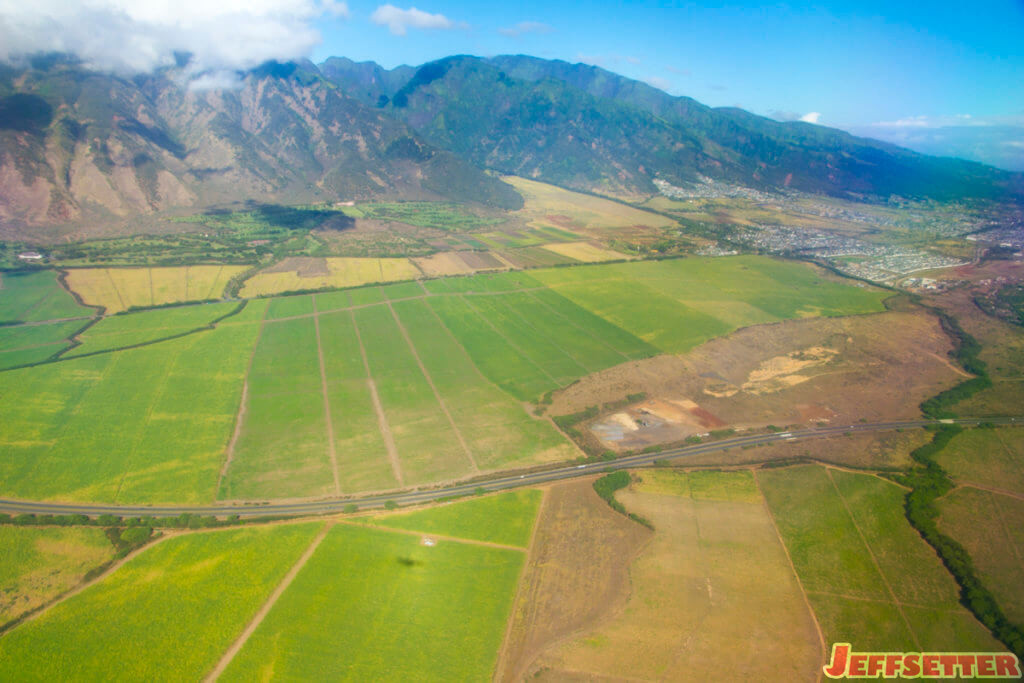
So what does the end of sugar on Maui mean for the island? HC&S was a large employer, and many of the employees have only ever worked at the mill. 675 employees will have lost their jobs when all is said and done, half of which have already been laid off. This will, of course, have economic consequences for the Valley Isle. Perhaps the biggest impact most visitors will see, though, is the lack of greenery in Maui’s central valley.

Beyond Maui, the end of sugar on Maui could have further implications. On Oahu, OnoPops, a local popsicle company, has stated that they will cease operations if another source of locally grown and processed sugar can’t be sourced. Why? Because OnoPops uses only local ingredients in making its products. Can’t find an ingredient, they won’t make a flavor. Unfortunately sugar is essential to all their products, so without a local source of sugar, their business cannot continue, at least under the way they currently do things. And while this may be an extreme example of what can happen, OnoPops likely won’t be the only company to be affected in this way.
The end of sugar on Maui will undoubtedly have a profound and lasting effect on the island. What these changes will be remains to be seen. Yesterday was just the beginning of the changes to come, but it’s safe to say Maui will never be the same again.